DeepUnity

Subsea pipe mechanics, computed in seconds instead of days.

DeepUnity builds fast, physics-faithful models for offshore pipe problems: neural surrogates that predict jumper strength and fatigue along every element, and a GPU-batched solver for guided-wave dispersion in pressurized pipes.

seabed hub 1 hub 2 span 88 m Δh 8 m clearance 10 m governing element unity 0.94 · elbow 1 0.2 1.0 unity
Fig. 1 — Predicted longitudinal unity along a 88 m M-shape jumper, hub 2 raised 8 m. Illustrative profile; the tools return this per element for your inputs.
01 · Subsea jumpers
Inputs per case
32
Strength model
BiLSTM · RMSE ≈ 0.07 unity (ISOPE 2026)
Fatigue model
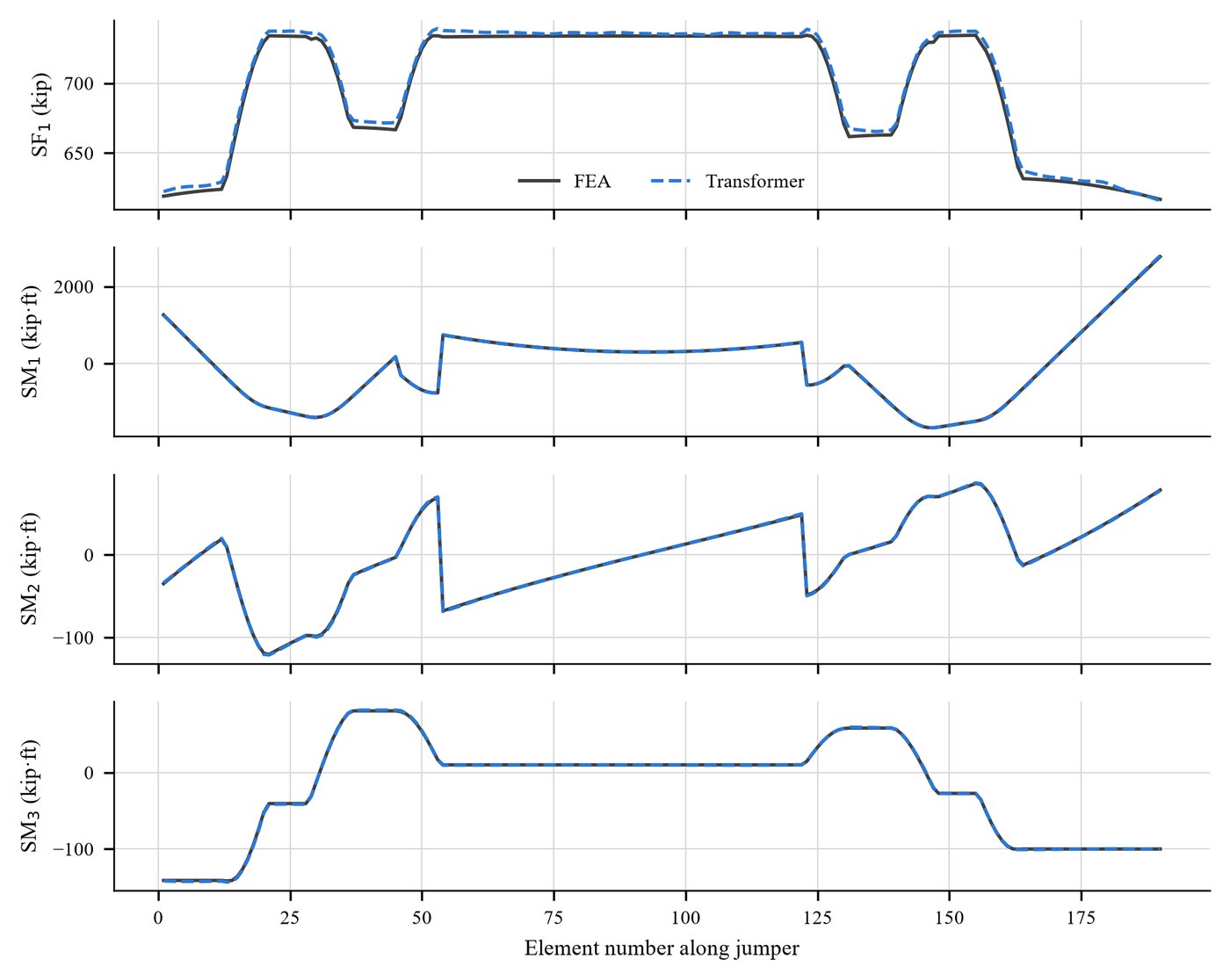
Transformer · R² > 0.999 on forces
Design codes
ASME B31.8 · DNV-RP-C203
Inference
≈ 10 ms per configuration, CPU
Validation
Held-out simulations, never trained on
02 · Guided waves
Formulation
Prestressed SAFE, Hermitian pencil in k
Discretisations
2D Q4 cross-section · 1D harmonic
Backend
NVIDIA Warp assembly · PyTorch eigensolve
Batched solves
65,536 in 0.52 s on one GPU
Gradients
Exact ∂ω/∂{P, t, E, ν, ρ}, crossing-safe
Verification
T(0,1) to machine precision · closed-form pressure shift

Projects

Two problems · one approach: physics in, speed out
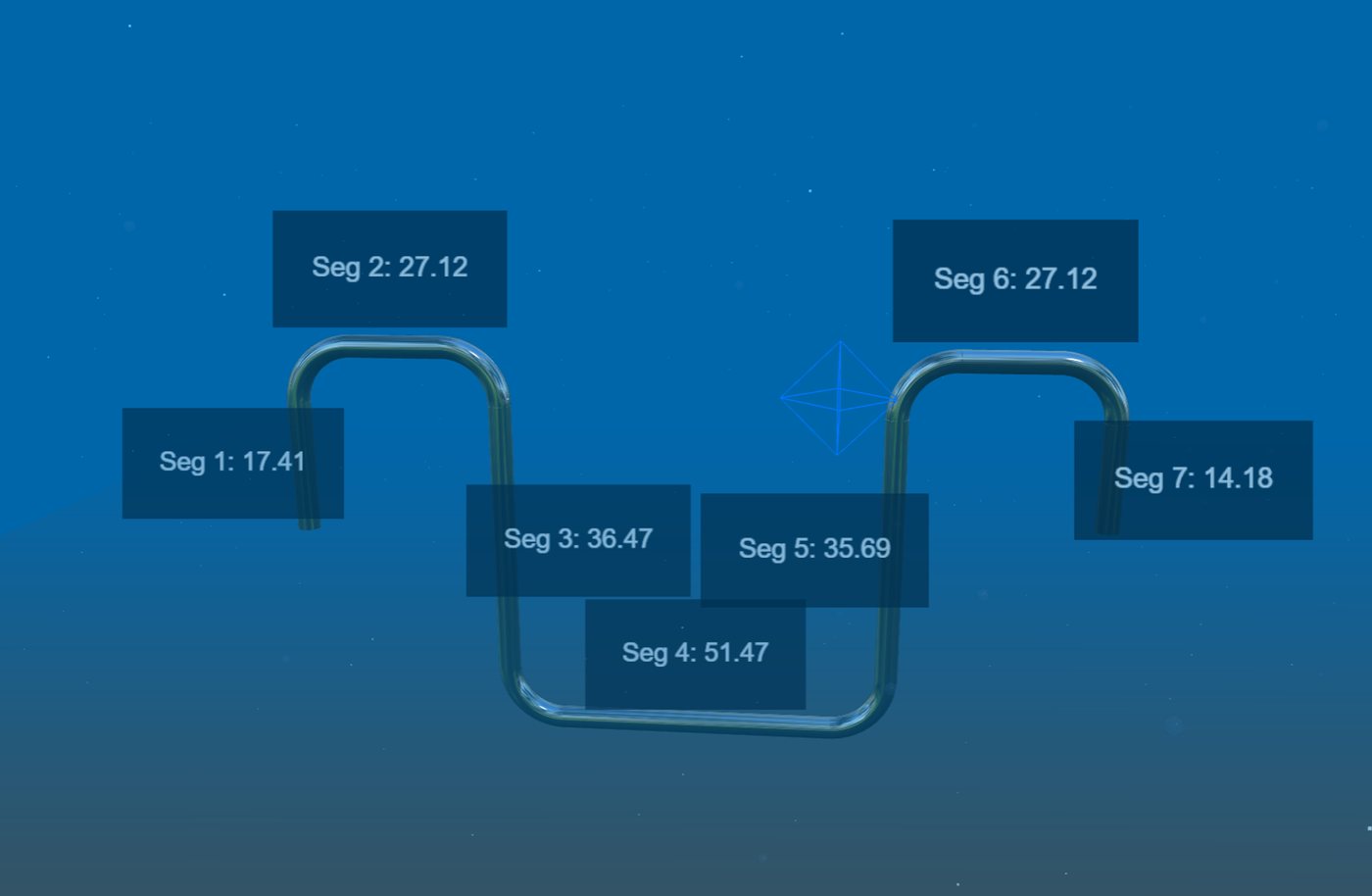
3D jumper rendered in the strength prediction tool, coloured by unity
01liveNeural surrogates · ASME B31.8 · DNV-RP-C203

Subsea jumpers

M-shape jumpers connect subsea wells, manifolds and pipelines, and every one is a bespoke structure. Surrogates trained on a large finite-element campaign return per-element strength and fatigue in seconds, so a design can be screened during the meeting that asked for it.

Open the strength tool →
#surrogate#bilstm#transformer#unity#fatigue
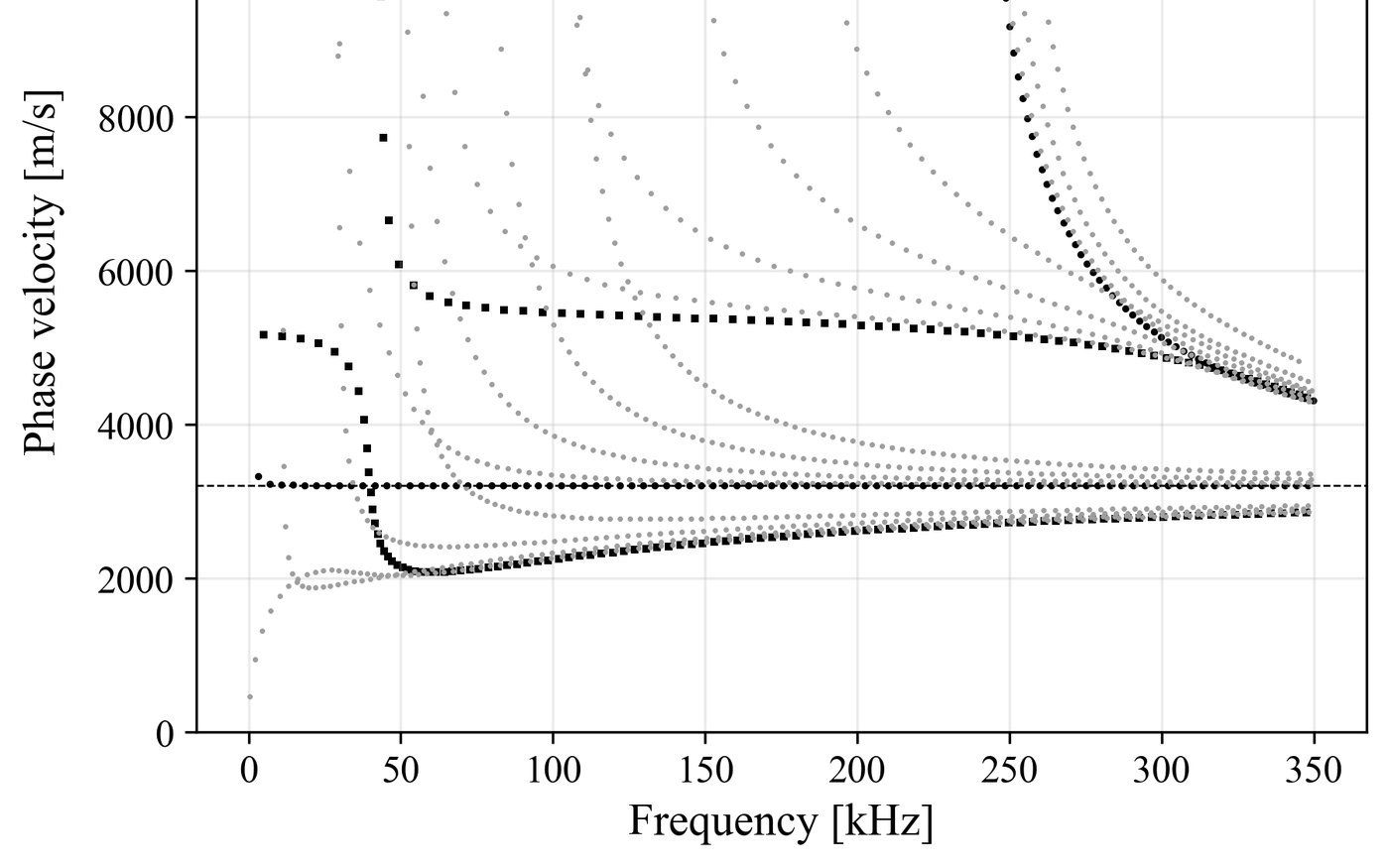
Phase velocity dispersion curves for torsional, longitudinal and flexural modes in a pipe
02in developmentGPU-SAFE · NVIDIA Warp + PyTorch · differentiable

Guided waves in pressurized pipes

Ultrasonic guided waves are how pipelines are inspected, and internal pressure shifts their dispersion curves. GPU-SAFE is a semi-analytical finite element solver batched on the GPU, with exact gradients, for computing those curves across thousands of pipe geometries and pressures at once.

Read the method →
#safe#dispersion#acoustoelastic#gpu#autodiff

Physics in the data, code checks in the loop

Method · jumper surrogates
  1. 01

    Finite-element campaign

    Jumpers are sampled across geometry, pipe section, pressure, temperature, water depth, hub tolerances and end expansions, then solved in Abaqus with nonlinear geometry.

    nonlinear Abaqus runs
  2. 02

    Sequence surrogate

    The element chain is read like a sentence: type, position and the 32 global inputs at every element. A BiLSTM predicts unity directly; a transformer predicts axial force and bending moments.

    per-element output
  3. 03

    Code checks

    Predicted forces become stresses by the same arithmetic the FEM post-processor uses: ASME B31.8 design factors for strength, DNV-RP-C203 S-N curves and Miner summation for fatigue.

    deterministic
  4. 04

    Design search

    At milliseconds per case the design tool enumerates every feasible configuration for a span and elevation, ranks by target unity, and reports where the governing stress occurs.

    seconds per sweep

The models never see a stress they were not trained on. Everything downstream of the network is deterministic engineering arithmetic, so a prediction can always be traced back to a formula. The guided-wave project takes the other route: no surrogate at all, but a direct finite-element solver made fast enough on a GPU to sweep thousands of cases.

Built by an engineer who has designed these

DeepUnity is developed by Chi Yang, Ph.D., a versatile engineer working across offshore structures, machine learning and high-performance computing. It began with a simple question: if a FEED-level jumper design takes days of finite-element iteration, how much of that can a model trained on the same physics do in seconds?

The site is a research tool and a showcase. Strength prediction is free to use. If you are an operator, EPC or consultancy with jumper, spool or riser problems of your own, get in touch.

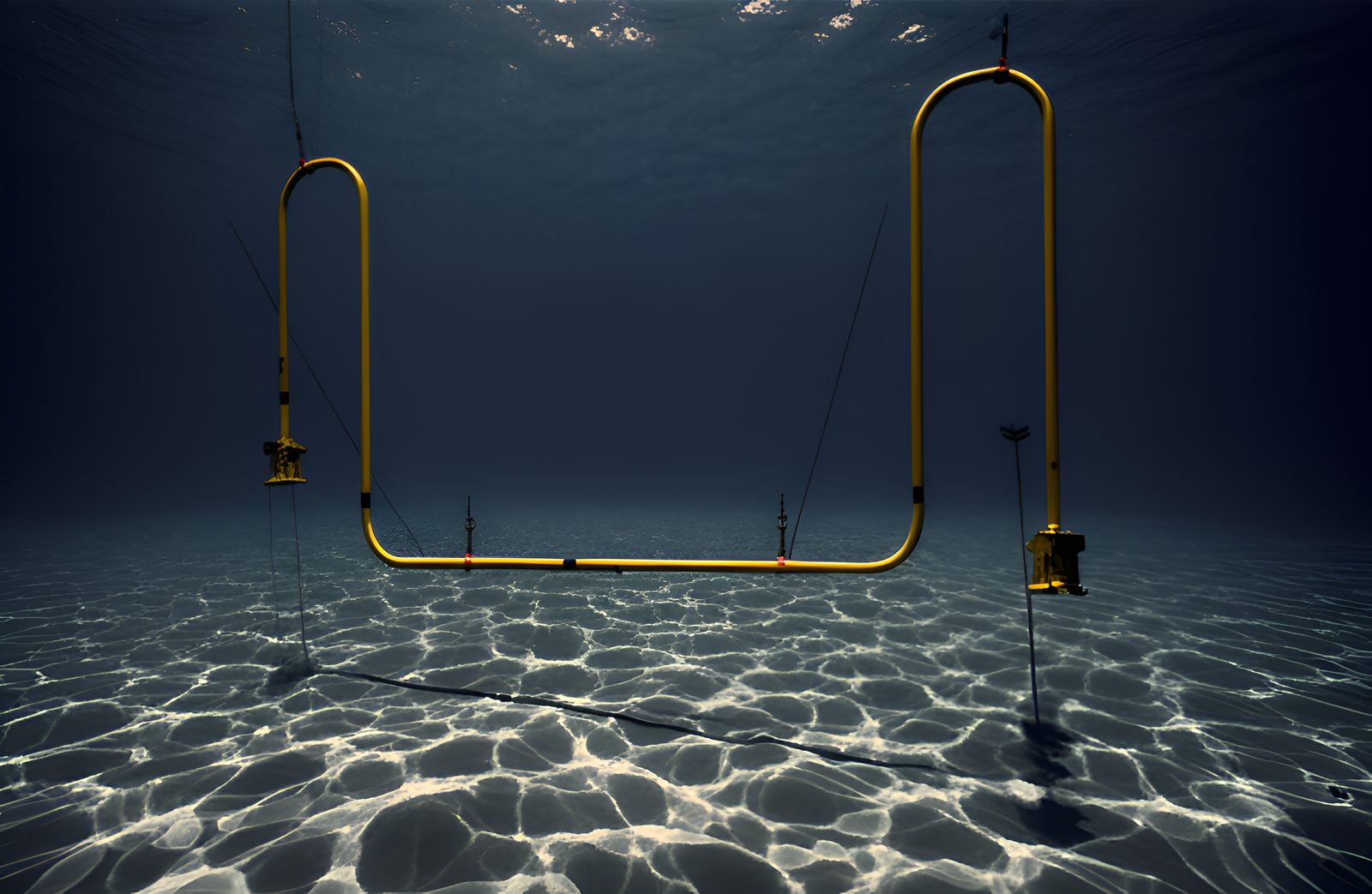
Rendering of an M-shape subsea jumper on the seabed
Fig. 2 — M-shape jumper between two hubs on the seabed. Illustration.